
commercial floor mats
Salt, slush, grit, and moisture at an entrance can leave floors exposed when a mat is too small or saturated. Choosing commercial floor mats means planning coverage, cleaning, and upkeep for daily traffic, not just picking a material.
Key Takeaways
- A mat that is too small or waterlogged stops trapping soil, so undersized or saturated entrance matting can leave your floors exposed to salt, slush and grit.
- Good matting decisions start with your building's daily traffic, entry layout and surface conditions rather than material choice alone.
- Minnesota winters make entrance upkeep harder, so coverage and cleaning frequency should be reviewed against seasonal conditions.
- Rental programs can adjust mat quantities and pickup schedules as your facility's needs change.
- Talk with Pilgrim Facility Services about mat rental and cleaning options, including custom logo mats, to find a plan that fits your entrance.
Start by matching each mat’s function to your building’s conditions, then decide how it will be maintained. This can help prevent gaps, shifting edges, and worn mats without a replacement plan.
Why Commercial Floor Mats Are a Facility Program, Not a One-Time Purchase
Matting helps capture tracked-in soil and moisture, manage water in selected work areas, and provide a more stable surface underfoot. The right plan depends on traffic, weather exposure, flooring, and cleaning capacity. A mat program includes pickup, laundering, rotation, and replacement, rather than treating each mat as a standalone purchase.
What Commercial Floor Mats Do: Dirt Control, Moisture Control and Slip Reduction
Entrance mats collect dirt and moisture before they travel farther into a facility. Scraper surfaces loosen grit from shoes, while absorbent faces take up water. In Minnesota, salt and slush can arrive in repeated waves through a vestibule, so the setup needs to fit the door, traffic pattern, and time between cleanings.
Matting can support a floor-care plan, but it does not eliminate slip hazards. Keep mats flat and in good condition, and address wet or greasy spots promptly. For traction claims, look for clearly identified test standards rather than assuming a material or texture makes every floor safe.
The Real Cost of Undersized or Worn-Out Matting
A short mat may become saturated before people have walked across enough absorbent surface to remove moisture from their shoes. Gaps at the doorway can let grit reach carpet, tile, or finished floors, adding cleaning work. Curling corners, sliding mats, and frayed edges can interfere with ordinary foot traffic.
Inspect mats for worn surfaces, loose backing, and edges that no longer lie flat. Consider whether the coverage, condition, and cleaning plan suit the work the mat must do, not only what it costs.
Buy, Replace, Repeat: Why One-Time Purchases Fall Short in High-Traffic Buildings
Busy buildings need ongoing mat care. Pilgrim Facility Services. Floor Mat Service & Rentals provides floor mat rentals in a variety of sizes and styles, professional mat cleaning service, customized pickup and delivery schedules, and flexible cleaning frequency adjustments. No contracts required. Larger uniform orders may include a service agreement, a qualification that applies to uniform programs.
Scheduled pickup and delivery allow mats to be laundered and rotated instead of waiting for a manager to notice they are dirty or worn. Pilgrim Facility Services. Floor Mat Service & Rentals also offers custom logo mats for branding. A managed schedule can make mat condition and cleaning logistics easier to plan; appropriate frequency still depends on your building’s traffic and conditions.
Mat Types and Specs: A Comparison That Matches Vocabulary to Function
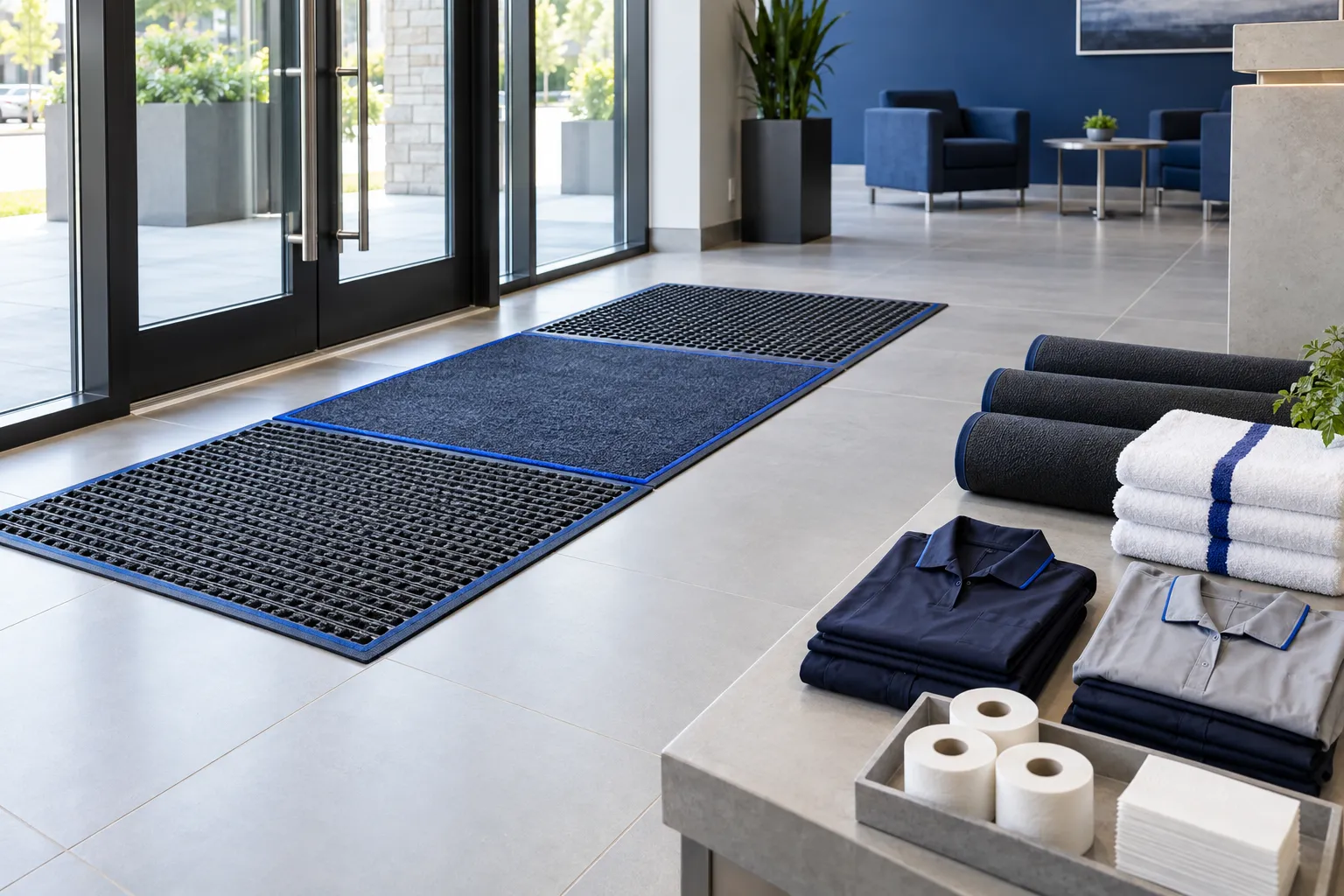
Scraper, Wiper and Drainage Mats: The Entry Zone System Explained
Scraper mats are designed to loosen dirt from footwear, while wiper mats absorb moisture and hold fine soil. Drainage mats let liquid pass through the surface and may suit selected wet work areas. You may not need all three types at every door. Consider what people bring in, where water collects, and how the mats will be cleaned.
| Mat function | Where it may fit | What to check |
|---|---|---|
| Scraping | Exterior approaches or the first entry point | Surface texture, weather exposure, and debris removal |
| Wiping and absorption | Vestibules and interior entrances | Absorbent face, edge condition, and cleaning method |
| Drainage | Selected wet work zones | Liquid flow, floor compatibility, and ease of lifting for cleaning |
Anti-Fatigue and Specialty Mats for Workstations and Production Areas
Anti-fatigue mats are intended for standing workstations where staff may remain in one place for extended periods. Specialty surfaces can suit defined tasks, such as areas needing drainage or added resistance to particular substances. Choose for the work performed, considering worker movement, carts or equipment, cleaning routines, and whether edges could obstruct nearby traffic.
Spec Vocabulary Decoded: Face Weight, Mil Thickness, Backing Types and Recycled Content
Face weight, often stated in ounces per square yard (oz/sy), describes the weight of a mat’s surface material. Mil thickness measures thickness; it does not, by itself, tell you how long a mat will last. Backing terms such as SBR, nitrile, and urethane identify materials to evaluate for the intended floor and work conditions. Recycled content describes material sourcing, not a performance guarantee.
Compare surface construction, backing, intended location, and cleaning method. Ask how the specification relates to your facility rather than relying on one number as a stand-in for durability.
Custom Logo Mats: Inlay vs. Printed, Proofing and Realistic Wear Expectations
Custom commercial floor mats can display a logo or other branding at an entrance, but artwork and construction affect the finished appearance. Inlaid designs use separate material sections; printed designs apply an image to the mat surface. Request a proof to check logo placement, colors, and readability before production. Foot traffic, soil, moisture, and cleaning affect appearance over time, so confirm the recommended care method for the selected mat.
Sizing Math and Placement: How Many Feet of Matting Does Your Entrance Need?
The Entry Zone Formula: Linear Feet per Doorway for Minnesota Winter Conditions
There isn’t one doorway length that fits every building. Measure the walking path from the exterior entrance through the vestibule to the interior floor, then identify where people step, turn, and pause. In Minnesota, boots can carry salt, slush, and grit beyond the first few steps, especially during busy arrival periods.
- Map the route. Measure the usable walking distance from the outside approach to the point where footwear is likely to be reasonably dry.
- Measure the clear width. Cover the main foot-traffic path without blocking door swings, accessible routes, or equipment movement.
- Check the transitions. Note thresholds, turns, and flooring changes that could leave gaps or create raised edges.
- Reassess in use. Look for wet footprints beyond the mat and check how quickly the surface becomes saturated during peak traffic.
This is a planning method, not a fixed footage rule. A long entrance with steady traffic may need coverage in stages, while a smaller doorway with limited exposure may need less. Pilgrim Facility Services. Floor Mat Service & Rentals offers floor mat rentals in a variety of sizes and styles, so you can discuss dimensions and placement for your entrance.
Backing Types and Floor Compatibility: Cleated, Smooth, Nitrile and Urethane
Choose backing for the floor surface and location. Cleated backing may be intended for carpet, while smooth backing is commonly considered for hard surfaces. Nitrile and urethane describe backing materials, not a guarantee that a mat will stay in place on every floor. Review specifications for the intended surface, and test fit where conditions are uncertain.
Check that the mat lies flat, does not slide during ordinary foot traffic, and suits the floor finish and cleaning routine. Moisture, dust, floor treatments, and mat condition can affect how it sits. For large commercial floor mats, confirm that the full surface and perimeter are supported without obstructing doors or creating a curled edge.
Edges, Borders and Trip Reduction at Doorways and Transitions
Edges matter wherever people cross between surfaces. Look for a mat that fits the floor area, lies flat, and has a border suited to its placement. A mat too large for a recess or door swing may bunch; one too small may leave exposed strips where soil and moisture reach the floor.
Include thresholds, corners, and cart paths in the placement check. Inspect for curling, fraying, or movement, and correct the setup when those conditions appear. Matting supports routine floor care but does not eliminate slip hazards, so clean wet areas promptly and keep walking routes clear.
Mat Selection Matrix by Facility Type: Restaurant, Healthcare, Industrial, Gym, Education and Property Management
Start with the material reaching each area, the work taking place, and available cleaning resources. This matrix is a starting point, not a substitute for checking the floor, traffic pattern, and product specifications at your site.
| Facility area | Conditions to assess | Placement priority |
|---|---|---|
| Restaurant | Tracked-in moisture, food soil, and kitchen spills | Entry path and defined wet work zones |
| Healthcare | Public traffic, cleaning routines, and carts | Stable coverage that keeps routes clear |
| Industrial | Workstation tasks, equipment, and floor conditions | Specific work areas and clear travel paths |
| Gym | Foot traffic and moisture near activity areas | Entrances and locations where water collects |
| Education | Arrival peaks, seasonal soil, and hallway flow | Doorways and high-use transitions |
| Property management | Different entrances, surfaces, and tenant traffic | Coverage matched to each building’s conditions |
Restaurant and Industrial Kitchens: Grease, Water and Back-of-House Flow
Grease- and Oil-Resistant Matting for Kitchens and Auto Bays
Choose a mat for the substances and tasks in each zone. Grease, oil, water, and food debris call for different considerations than dry entrance soil. Check product information for material compatibility, intended use, and cleaning method. Heavy duty industrial floor mats should fit around workstations and equipment without blocking movement or creating a difficult cleaning edge.
Consider how staff will lift or move the mat for floor cleaning, and whether carts or tools cross it during a shift. A surface that suits one work area may not suit another; assess entrance, prep, cooking, and maintenance zones separately.
Drainage Mats, Slip Exposure and Safe Staff Movement in Wet Zones
Drainage mats let liquid pass through and may suit selected wet work areas. Consider where liquid will go, how the floor below will be cleaned, and whether staff can lift the mat safely. A drainage surface does not make a wet or greasy floor hazard-free.
Keep walking paths and exits clear, and check mats for movement, curled edges, or trapped debris. Address spills promptly and include the mat and the floor beneath it in the cleaning routine.
A Labeled Example: Matting a Twin Cities Restaurant Entrance and Line
The layout depends on the doorway, floor materials, traffic, and work practices. Pilgrim Facility Services. Floor Mat Service & Rentals provides professional mat cleaning service and customized pickup and delivery schedules. Discussing the entrance and work zones together can help your team plan coverage and cleaning around facility needs.
Buy vs. Rent, Cleaning Cadence and Your Next Step
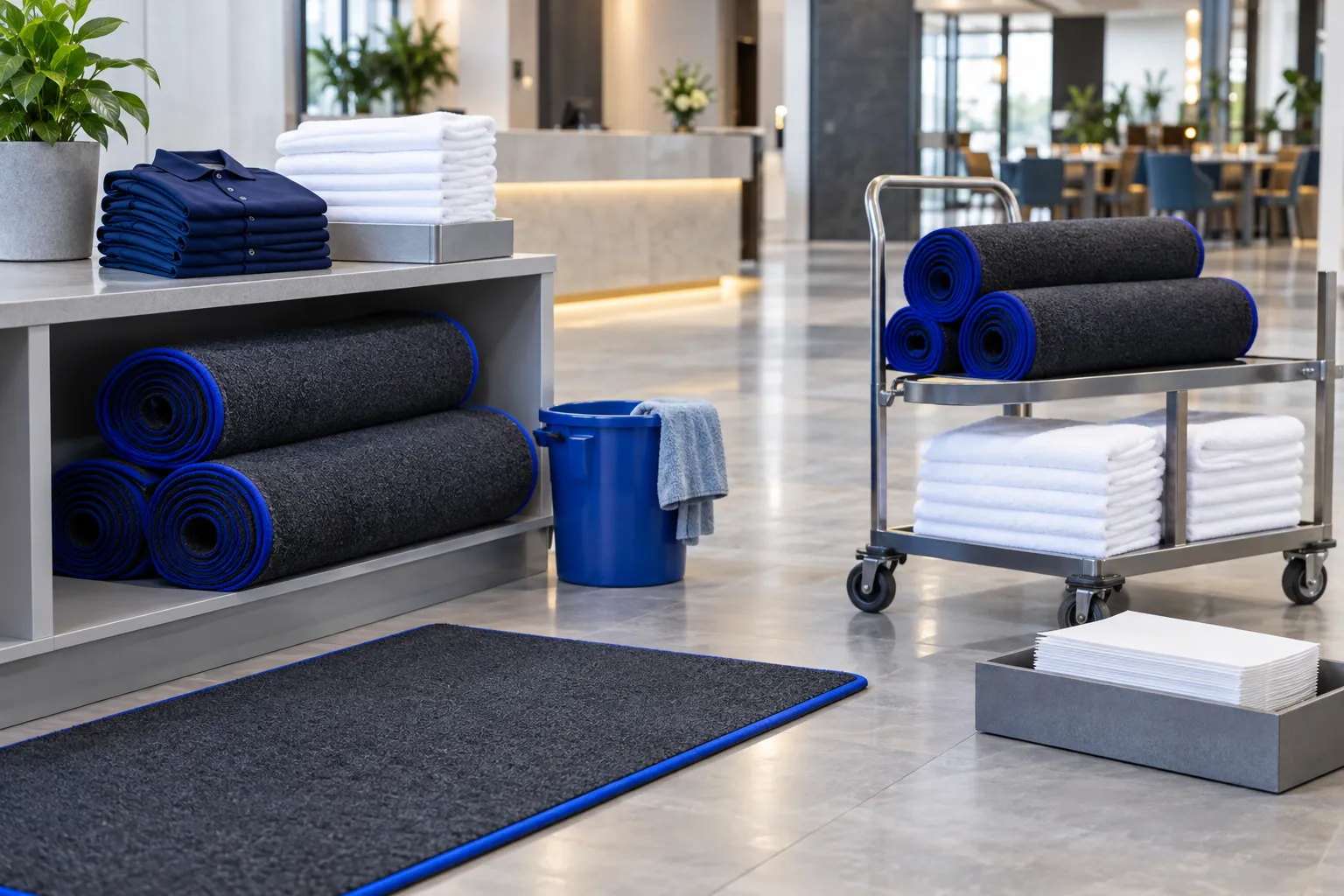
Buy-and-Clean-In-House vs. Mat Rental Service: A Cost-per-Month Comparison
The lower-cost choice depends on more than purchase price or rental fee. Include cleaning labor, laundering access, storage, replacement needs, and the time required to keep mats in rotation. An in-house plan may work when staff can clean and inspect commercial floor mats consistently. A service may fit better when your team wants scheduled pickup, professional cleaning, and a replenishment routine.
| Consideration | Buy and manage in-house | Use a mat rental service |
|---|---|---|
| Monthly costs | Purchase, cleaning labor, supplies, and replacement | Service charges and the agreed schedule |
| Cleaning logistics | Your team handles collection, washing, drying, and storage | Pickup and professional cleaning are arranged through the service |
| Rotation | Keep suitable spare mats available | Ask how clean mats return and how the schedule can adjust |
| Best fit | Facilities with staff time and appropriate cleaning capacity | Teams seeking scheduled support for ongoing mat care |
Compare the full monthly workload, not only the cost of a mat. Pilgrim Facility Services. Floor Mat Service & Rentals includes floor mat rentals in a variety of sizes and styles, professional mat cleaning service, customized pickup and delivery schedules, and flexible cleaning frequency adjustments. No contracts required.
How Often Should Commercial Floor Mats Be Cleaned, and Can They Be Laundered?
Set cleaning frequency according to traffic, weather, soil, moisture, and how quickly a mat becomes dirty or saturated. A Twin Cities entrance may need closer attention during salt and slush conditions than during a dry spell. Inspect surfaces and edges during routine floor checks, and adjust the schedule when mats stop looking or performing clean.
Many service programs include laundering, but the method depends on the mat’s construction and care instructions. Confirm that the selected mat can be cleaned through the proposed process. Pilgrim Facility Services. Floor Mat Service & Rentals offers flexible cleaning frequency adjustments, so the schedule can reflect changing facility conditions.
A Buying Checklist That Doubles as a Service-Program Scoping Sheet
Use these questions to scope an in-house plan or managed service for commercial floor mats:
- Which entrances and work areas need coverage?
- What are the floor surfaces, door clearances, and traffic patterns?
- How quickly do mats collect dirt or moisture during busy periods?
- Who will inspect mats, arrange cleaning, and keep replacements or spares ready?
- Which dimensions, styles, and cleaning schedule suit each location?
Discussing a Floor Mat Program for Your Facility
A mat plan should reflect your space, upkeep capacity, and seasonal demands. If scheduled cleaning and pickup would help, contact Pilgrim Facility Services to discuss your facility’s needs, confirm route coverage, or request a tailored quote.
Call or text 612-750-5729 or email info@pilgrimfs.com to discuss your facility’s needs.
Frequently Asked Questions
What is the difference between scraper, wiper and drainage mats, and do I need all three?
Scraper mats loosen dirt from shoes, wiper mats absorb moisture and hold fine soil, and drainage mats let liquid pass through in selected wet work areas. You may not need all three at every door. Match the setup to what people track in, where water collects, and how the mats will be cleaned.
How many feet of matting does an entrance actually need?
Entrance matting length depends on your doorway, walking path and traffic, so there is no single number that fits every building. Measure the path from the exterior entrance through the vestibule to the interior floor, noting where people step, turn and pause. In Minnesota winters, salt and slush often travel beyond the first few steps.
Is it cheaper to buy commercial floor mats or rent them through a mat service?
Renting commercial floor mats often costs less over time in busy buildings because laundering, rotation and replacement are built into the service. A one-time purchase leaves upkeep, cleaning and replacement planning on your team. We offer mat rentals with customized pickup and delivery schedules, and no contracts are required.
How often should commercial floor mats be cleaned, and can they be laundered?
Commercial floor mats should be cleaned based on traffic and weather exposure, not on a fixed calendar, since saturated mats stop capturing soil and moisture. Professional laundering is an effective way to keep them working. Our mat rental service includes professional cleaning with flexible frequency adjustments and scheduled pickup and delivery.
What kind of floor mat works best in a restaurant kitchen with grease and water?
Drainage mats are usually the best fit for restaurant kitchens because liquid passes through the surface instead of pooling underfoot. Check liquid flow, floor compatibility and how easily the mat lifts for cleaning. Choose edges and surface types that suit carts, equipment and worker movement in the space.
Why do worn or undersized entrance mats cause problems?
Worn or undersized mats can saturate before moisture is removed from shoes, letting grit and salt reach interior floors and add cleaning work. Curling corners and sliding edges can also interfere with foot traffic. Inspect mats regularly for worn surfaces, loose backing and edges that no longer lie flat.
Are custom logo mats worth it for a business entrance?
Custom logo mats let a business display branding right at the entrance while still controlling dirt and moisture. Choose between inlaid designs, which use separate material sections, and printed designs, which apply an image to the surface. We recommend requesting a proof to check placement, colors and readability before production.